Food and beverage plastics dominate global shorelines: A harmonized rank-based assessment
Why is so much of the plastic on our beaches food packaging?
 Walk along almost any beach in the world and you will find signs of human activity. A bottle cap buried in the sand. A crisp packet caught between rocks. A takeaway container washed ashore after a storm. Most of us have seen this kind of litter before. But a recent international study reveals just how dominant food and drink packaging has become in coastal pollution around the world.
Researchers analysed data from more than 5,000 coastal surveys across 94 countries. Their conclusion was striking: food and beverage packaging was the most common type of litter found on beaches and coastlines worldwide. It appeared on more than 90 percent of all surveyed locations. The finding raises an important question. How does so much packaging end up in the ocean in the first place?
The journey of a wrapper
When we find a plastic wrapper on a beach, it is tempting to assume that someone simply dropped it there. Sometimes that is true. But many pieces of plastic have travelled a surprisingly long way before reaching the coast. A bottle discarded in a city can enter a drainage system during heavy rain. A food container left in a park can be carried into a river. Lightweight packaging can be blown by the wind for kilometres before eventually reaching water. Rivers, streams and canals connect our daily lives to the sea.
By the time a piece of plastic reaches the coastline, it may have passed through multiple cities, waterways and ecosystems. The beach is often not where the problem starts. It is simply where we begin to notice it.
Why packaging is such a challenge
Food packaging is designed to be convenient. It is lightweight, inexpensive, durable and easy to transport. Ironically, these same qualities make it a persistent environmental problem. Many items are used for only a few minutes but remain in the environment for decades. Unlike organic materials, plastic does not disappear. Instead, it gradually breaks down into smaller and smaller fragments.
A plastic bottle can become hundreds or even thousands of tiny pieces. A food wrapper can eventually become microplastics that are almost impossible to remove from the environment. The result is that even when larger pieces are no longer visible, the plastic itself often remains.
What we see during our expeditions
One of the most surprising things participants discover during our expeditions is how ordinary marine litter looks. People often expect to find unusual or industrial waste. Instead, they find familiar objects. Packaging from snacks. Drink bottles. Food containers. Bottle caps. Pieces of rope. Fragments of everyday products that once passed through someone’s hands. This is important because it changes how we think about pollution.
Plastic pollution is not something that happens somewhere else. It is closely connected to the products we use every day and the systems that manage our waste. The ocean reflects our habits back to us.
Looking beyond the litter
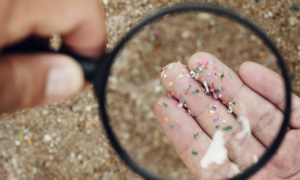 Finding plastic on a beach is concerning. But the visible litter is only part of the story. Many pieces eventually break down into fragments too small to see easily. These microplastics can be found throughout marine ecosystems, from coastal waters to the deep ocean. Scientists are still learning about the long-term impacts of these particles on marine life and ecosystems. What we do know is that plastic moves through food webs and is now found in places that were once considered untouched.
This is why monitoring matters. By collecting data on what types of litter are found, where they appear and how their presence changes over time, researchers can better understand the sources of pollution and identify effective solutions.
From awareness to action
The latest study provides a clear message. If we want to reduce plastic pollution in the ocean, we cannot focus only on what happens at sea. We must also look at what happens on land. How products are designed. How waste is collected, materials are reused and how individuals, businesses and governments make decisions about packaging. No single action will solve the problem. But every improvement in design, waste management and public awareness helps reduce the flow of plastic into rivers and oceans.
What can you do?
You do not need a research vessel or a scientific background to make a difference. Start by paying attention. Notice the packaging you use during a normal day. Consider which items are designed to be thrown away after only a few minutes. Think about where they go once they leave your hands. Small observations often lead to bigger questions. And bigger questions lead to change.
At The Ocean Movement, we believe that understanding the problem is the first step towards solving it. The more we learn about how plastic moves through our world, the better equipped we are to protect the ocean that connects us all. Because the story of a plastic wrapper does not end when we throw it away. Sometimes, it ends on a beach.

Plastic pollution reaches the deep-sea…
A new study shows that microplastics have now reached one of the most extreme and isolated environments on Earth: deep-sea hydrothermal vents, more than 2,000 metres below the surface.
Read story

Share this post: